Introduction
Plastic pollution has emerged as one of the most pressing environmental challenges of our time. With millions of tons of plastic waste entering our oceans and landfills annually, finding sustainable solutions is imperative. Among the various types of plastics, polyethylene terephthalate (PET) bottles are ubiquitous due to their widespread use in packaging beverages and other consumer goods. Recycling these PET bottles is not only environmentally beneficial but also economically viable. Central to this recycling process is the PET bottle recycling washing line, a sophisticated system designed to transform waste into valuable raw materials. This article delves into the intricate workings of a PET bottle recycling washing line, exploring each stage of the process, its importance, and the technological advancements that have made efficient recycling possible.
Understanding the mechanics of the PET bottle recycling washing line is essential for industries and stakeholders committed to sustainability. It not only highlights the technological innovations in recycling but also underscores the potential economic and environmental benefits of adopting such systems.
The Significance of PET Bottle Recycling
Recycling PET bottles offers multifaceted benefits. Environmentally, it reduces the volume of waste destined for landfills and oceans, mitigating the detrimental effects on wildlife and ecosystems. Economically, recycled PET (rPET) serves as a cost-effective raw material for manufacturing various products, reducing the reliance on virgin resources. Socially, the recycling industry creates jobs and fosters community engagement in environmental stewardship.
The global push towards a circular economy further amplifies the importance of PET recycling. In a circular economy, products and materials are kept in use for as long as possible, extracting maximum value before recovery and regeneration. The PET bottle recycling washing line is a pivotal component in realizing this vision by efficiently converting waste into reusable materials.
Overview of the PET Bottle Recycling Washing Line
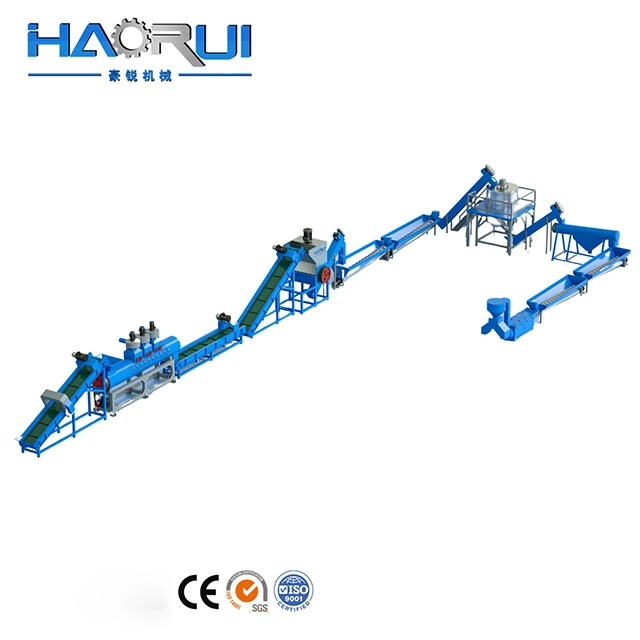
A PET bottle recycling washing line is an assembly of interconnected machinery and processes designed to clean, sort, and prepare used PET bottles for reuse. The system meticulously removes contaminants such as labels, caps, adhesives, and organic residues, producing high-quality PET flakes suitable for various applications. The washing line not only enhances the purity of recycled PET but also increases the efficiency of subsequent manufacturing processes.
Key Components and Functions
The efficiency of a PET bottle recycling washing line hinges on its components, each fulfilling a specific role:
Conveyor Systems: Transport materials between different stages.
Label Removers: Strip labels using mechanical action.
Crushers/Shredders: Reduce bottle size for easier processing.
Washing Units: Clean contaminants through cold and hot washing.
Separation Tanks: Segregate materials based on density differences.
Drying Equipment: Remove moisture from PET flakes.
Sorting Units: Ensure final product purity through inspection.
Storage Silos: Store clean PET flakes for packaging.
In-Depth Process of the Washing Line
The transformation of used PET bottles into high-quality flakes involves several meticulous steps. Each stage is crucial in ensuring the efficiency and effectiveness of the recycling process.
1. Collection and Initial Sorting
Successful recycling begins with the systematic collection of PET bottles from various sources, including municipal waste, commercial establishments, and dedicated recycling bins. The initial sorting is critical to separate PET bottles from other plastics and contaminants. Advanced sorting technologies, such as near-infrared (NIR) spectroscopy and machine vision systems, are employed to enhance accuracy and speed. These technologies identify plastics based on their chemical composition and color, directing them appropriately for further processing.
Manual sorting complements automated systems, especially when dealing with complex waste streams. Workers inspect the conveyor belts, removing non-PET materials and large debris. This combination of automation and human oversight ensures a high level of purity before the bottles proceed to the next stage.
2. Removal of Labels and Caps
Labels and caps pose a significant challenge in PET recycling due to their material differences. Labels may be made from paper, PP, or PVC, while caps are typically PE or PP. The removal process involves mechanical label removers that utilize friction and blades to strip labels without damaging the bottles. Simultaneously, cap separation is achieved through specialized machines that exploit the physical differences between PET and cap materials.
For operations dealing with a variety of bottle types, incorporating a PP PE bottle washing line enhances the separation efficiency. This specialized equipment is adept at handling bottles with PP and PE components, ensuring that PET remains uncontaminated.
3. Pre-Washing
Pre-washing serves to remove surface-level impurities such as dust, dirt, and remnants of liquids. Utilizing spray washers or immersion tanks, the bottles are cleansed using water, sometimes supplemented with mild detergents. This step not only improves the effectiveness of subsequent processes but also prevents damage to machinery caused by abrasive particles.
4. Size Reduction through Crushing and Shredding
Reducing the size of the PET bottles is critical for efficient washing and drying. Crushers and shredders break down the bottles into smaller pieces, typically ranging from 12 mm to 18 mm in size. This size reduction increases the surface area, facilitating better cleaning and easier handling. The equipment used is robust, capable of processing large volumes while ensuring uniformity in flake size.
5. Hot Washing for Deep Cleaning
Hot washing is a pivotal phase where the PET flakes undergo intensive cleaning. The flakes are agitated in hot water mixed with caustic soda and detergents at temperatures between 80°C and 95°C. This process effectively dissolves adhesives, oils, and other tenacious contaminants. The combination of heat, chemicals, and mechanical agitation ensures that the flakes meet high purity standards required for quality recycling outputs.
Monitoring and controlling the parameters of hot washing, such as temperature, pH levels, and duration, are crucial. Advanced systems utilize sensors and automated controls to maintain optimal conditions, ensuring consistent quality while minimizing resource consumption.
6. Friction Washing for Residual Removal
Following hot washing, friction washers provide additional cleaning by scrubbing the flakes against each other and the equipment surfaces. High-speed rotors generate centrifugal forces, enhancing the removal of residual contaminants. This step is particularly effective in eliminating fine particles and ensuring the flakes are thoroughly clean.
7. Sink-Float Separation Process
The sink-float separation exploits the density differences between PET and other materials. In water, PET flakes sink due to their higher density (~1.38 g/cm³), while PP and PE materials, with densities less than 1 g/cm³, float. By introducing the flakes into a water-filled separation tank, the system effectively segregates PET from non-PET contaminants. Skimmers remove floating materials, while PET flakes are collected from the bottom.
This method is simple yet highly effective, ensuring that the subsequent recycling stages work with predominantly pure PET material. The process can also be adjusted by adding media to the water to alter its density, allowing for more precise separation when dealing with materials of similar densities.
8. Drying Techniques
Proper drying is essential to prevent hydrolytic degradation of PET during further processing. The initial drying occurs in mechanical dryers, such as centrifugal dryers, which remove surface moisture through high-speed rotation. Subsequent thermal drying uses heated air in moving bed dryers or rotary drum dryers to reduce moisture content to less than 0.5%. The dried flakes are then suitable for extrusion, pelletizing, or direct use in manufacturing processes.
Energy efficiency is a key consideration in drying operations. Modern systems reclaim heat and incorporate insulation to minimize energy consumption, reducing operational costs and environmental impact.
9. Final Inspection and Quality Assurance
Quality assurance is paramount in producing high-grade recycled PET. The final inspection involves optical sorting machines that detect color and material inconsistencies. Advanced detectors identify and remove any remaining foreign particles, including metals and other plastics. Regular sampling and testing for intrinsic viscosity, contaminant levels, and moisture content ensure that the flakes meet industry standards.
The adherence to stringent quality protocols not only guarantees product integrity but also builds trust with customers who demand consistent and reliable raw materials for their manufacturing processes.
Technological Advancements in PET Recycling
The evolution of PET bottle recycling washing lines reflects significant technological progress. Innovations focus on enhancing efficiency, reducing environmental impact, and improving product quality.
Automation and Smart Controls
Modern washing lines integrate automation and smart control systems that monitor and adjust process parameters in real-time. Programmable logic controllers (PLCs) and human-machine interfaces (HMIs) allow operators to manage operations seamlessly. Automation reduces the reliance on manual labor, minimizes errors, and enhances overall productivity.
Predictive maintenance technologies utilize sensors and data analytics to forecast equipment wear and potential failures, enabling proactive maintenance schedules. This approach minimizes downtime and extends the lifespan of machinery.
Environmental Innovations
Sustainability is a driving force behind technological advancements. Water treatment and recycling systems are incorporated to reduce freshwater consumption and wastewater discharge. These systems treat process water through filtration, sedimentation, and biological treatments, allowing reuse within the washing line.
Energy efficiency is enhanced through the use of high-efficiency motors, variable frequency drives, and heat recovery systems. These measures lower energy consumption and reduce the carbon footprint of recycling operations.
Applications of Recycled PET Flakes
The high-quality PET flakes produced by the washing line open up a plethora of applications across various industries.
1. Fiber Production for Textiles
Recycled PET is widely used in the textile industry to produce polyester fibers. These fibers are the foundation of numerous textile products, including clothing, upholstery, and carpets. The use of rPET fibers reduces the demand for virgin polyester, conserving resources and energy.
2. Manufacturing of Food and Beverage Packaging
Advancements in recycling technologies have made it possible to produce food-grade rPET. Strict purification processes and compliance with regulatory standards allow recycled PET to be used safely in packaging for food and beverages. This application is particularly significant in reducing the environmental impact of single-use plastics.
3. Production of Strapping and Industrial Materials
PET flakes are utilized in the production of strapping materials used for securing goods during transportation. The high tensile strength and durability of PET make it ideal for this purpose. Additionally, recycled PET is used in manufacturing sheets, films, and other industrial materials.
4. Innovative Applications
The versatility of rPET has led to its use in innovative applications such as 3D printing filaments, construction materials, and automotive components. Research and development continue to expand the possibilities, enhancing the value proposition of PET recycling.
Economic and Environmental Impact
The adoption of PET bottle recycling washing lines yields significant economic benefits. By transforming waste into valuable commodities, recycling operations generate revenue while contributing to resource conservation. The demand for rPET is increasing globally, driven by consumer awareness and regulatory mandates promoting recycled content in products.
Environmentally, PET recycling reduces greenhouse gas emissions associated with the production of virgin plastics. It conserves non-renewable resources such as petroleum, used in the production of new PET. Moreover, recycling mitigates the environmental toll of plastic pollution, preserving ecosystems and biodiversity.
Challenges and Future Outlook
Despite the advancements, PET recycling faces challenges. Contamination of recycling streams, fluctuating market prices for recycled materials, and competition with low-cost virgin plastics can impact the viability of recycling operations. Addressing these challenges requires collaborative efforts among stakeholders, including government policies that incentivize recycling and the development of markets for recycled products.
The future outlook is optimistic. Innovations in chemical recycling and depolymerization processes are emerging, capable of converting PET waste back into its monomers for re-polymerization. These technologies could revolutionize recycling by handling mixed and contaminated plastics more effectively.
Furthermore, consumer demand for sustainable products is driving manufacturers to incorporate more rPET into their offerings. This trend is expected to continue, bolstered by international agreements and national regulations aimed at reducing plastic waste.
Conclusion
The PET bottle recycling washing line represents a critical technology in the pursuit of environmental sustainability and resource efficiency. By converting waste into valuable raw materials, it plays a vital role in mitigating plastic pollution, conserving resources, and supporting economic development. The intricate processes involved, from collection to final quality assurance, underscore the sophistication and importance of modern recycling systems.
Investing in such technology not only aligns with global sustainability goals but also offers tangible economic benefits. As the world grapples with the challenges of plastic waste, the implementation of efficient and effective recycling solutions like the PET bottle recycling washing line will be indispensable.
For detailed consultation and to tailor solutions that meet specific recycling needs, interested parties can reach out to industry experts through the contact page.
Frequently Asked Questions (FAQs)
1. What makes a PET bottle recycling washing line essential in recycling operations?
A PET bottle recycling washing line is crucial because it thoroughly cleans and processes used PET bottles, removing contaminants and producing high-quality PET flakes. This system enhances recycling efficiency, product quality, and ensures that the recycled material meets industry standards for various applications.
2. How does the hot washing process enhance the quality of recycled PET flakes?
Hot washing uses high temperatures and chemicals to dissolve adhesives, oils, and stubborn contaminants from PET flakes. This deep cleaning process significantly improves the purity of the flakes, making them suitable for high-quality applications, including food-grade packaging.
3. Can the washing line handle different types of plastics attached to PET bottles?
Yes, the washing line is equipped to handle various plastics attached to PET bottles, such as PP and PE caps and labels. Through mechanical separation and sink-float processes, it effectively separates these materials from PET, ensuring that the final product is pure.
4. What are the environmental benefits of using a PET bottle recycling washing line?
Using a PET bottle recycling washing line reduces plastic pollution by diverting waste from landfills and oceans. It conserves resources by reducing the need for virgin PET production, lowers greenhouse gas emissions, and supports the principles of a circular economy.
5. How does technological advancement improve the efficiency of PET bottle washing lines?
Technological advancements introduce automation, smart controls, and energy-efficient designs to PET bottle washing lines. These improvements enhance operational efficiency, reduce energy and water consumption, and increase the quality and consistency of recycled PET flakes.
6. Is it economically viable to invest in a PET bottle recycling washing line?
Investing in a PET bottle recycling washing line is economically viable due to the growing demand for recycled plastics. It offers cost savings by producing raw materials from waste, reduces expenses associated with waste disposal, and can generate revenue from the sale of recycled PET flakes.
7. Where can I get customized solutions for PET bottle recycling washing lines?
Customized solutions can be obtained from specialized manufacturers and suppliers who offer consultation, equipment customization, and technical support. For instance, reaching out through the contact page of PET Recycling Machinery can provide access to experts who tailor systems to specific operational needs.